



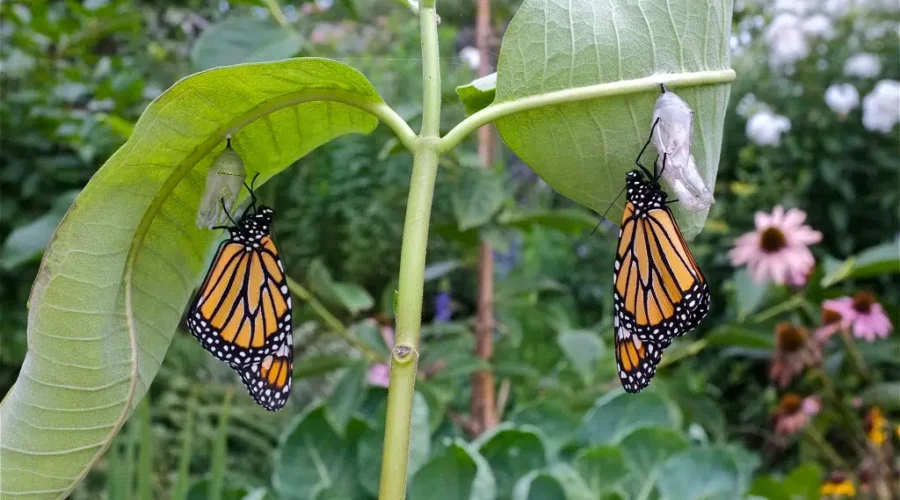
For the past two years a Monarch Butterfly program has been run at the Margaret Hennigar Public Library, allowing people to watch the hatching process of the butterflies.
Monarch butterflies only lay their eggs on Milkweed and it is the only thing the caterpillars will eat, as their sole food source it is necessary for their survival.
When Branch Coordinator Katherine Sharp, who runs the Monarch program went outside to collect some to feed the caterpillars she got a big surprise.
“Someone dug up and took all the Milkweed plants. Maybe they didn’t know what they were taking, because it is a really pretty flower even though it is called a weed. I hope that they are using it in a positive way and helping pollinators,” she said.
She said Milkweed is beneficial to all pollinators including butterflies, bees and even wasps and hornets.
“They love it and they do travel, so they help pollinate to some degree.”
Monarchs usually lay eggs at the end of June or the beginning of July and Sharp collects them for the program, but this year they have been late.
“I have about ten caterpillars this year, usually there are more. The first year we had a 10% mortality rate, in the wild only about 10% survive. They were a Species at Risk our first year and we were able to release over 100 butterflies,” she said.
The eggs are put into enclosures so people can watch the different stages from caterpillars to chrysalis to butterfly. They are then released outside.
“Monarch caterpillars are quite elusive, they like to hide on the underside of Milkweed leaves so to be able to watch them is quite rare,” said Sharp.
She hopes that whoever took the plants will bring some back, but if not she plans to harvest seeds from donated plants and offer free transplants next year.