



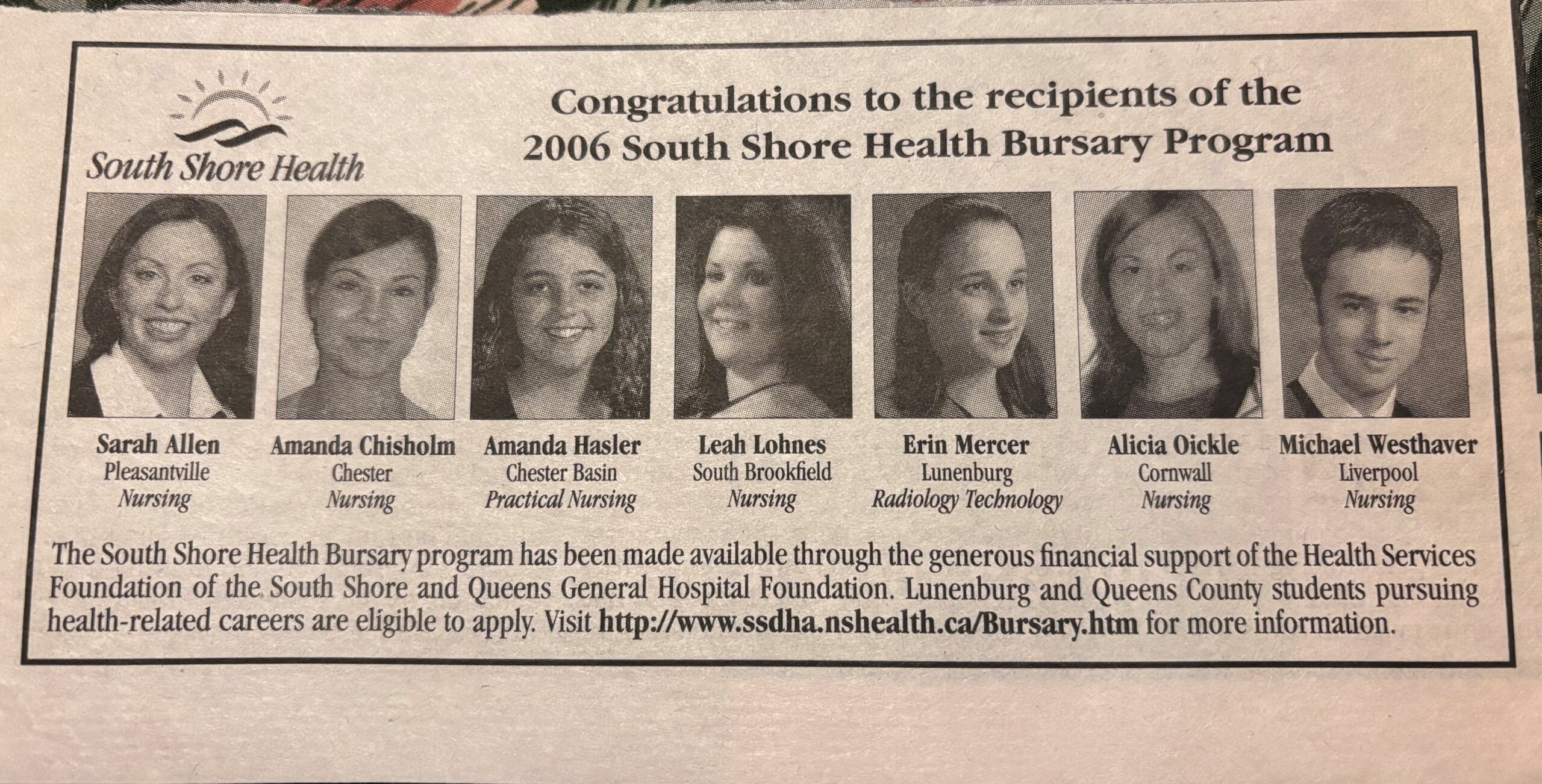
Amanda Noble called her mother recently looking for a newspaper clipping.
Her mother still had it: a short notice from 2006, featuring a photo of the first students ever selected for the South Shore Bursary Program. Amanda was one of them. She was working part-time through high school to save for tuition, and she had applied for the bursary without expecting much.
When the letter came back saying she’d been chosen, she called her mom then too.
A Legacy of Local Care
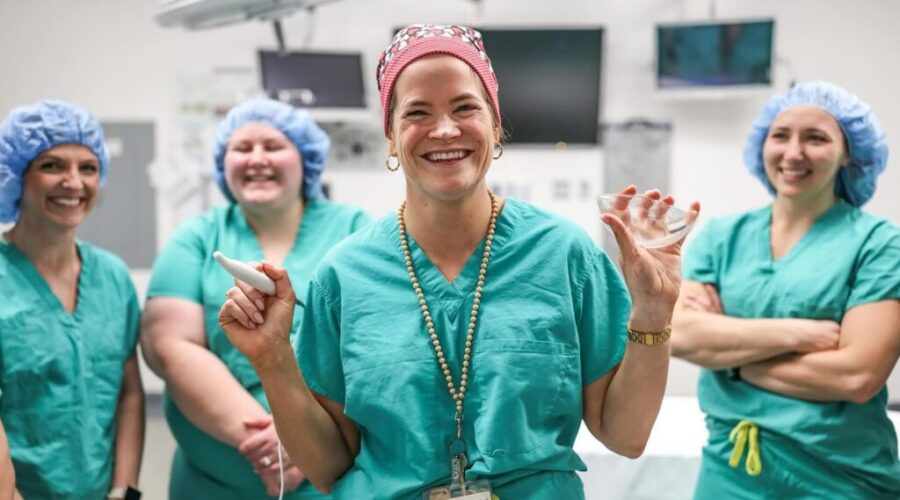
Twenty years later, Amanda Noble is the manager of the South Shore and Southwest Opioid Recovery Program and the Lunenburg Recovery Support Centre. The clipping is still at her mother’s house.
Getting there wasn’t simple. Amanda’s family sat in a gap that many South Shore students know well: her parents earned just enough to disqualify her from certain student loans, but not nearly enough to cover tuition, textbooks, and living expenses even with a part-time job.
Healthcare programs don’t leave much room for that kind of juggling anyway. The bursary changed everything.
Amanda remembers when the letter arrived. It was a breath of fresh air. “The financial support allowed me to work less and have more time to focus on my studies.”
Melissa Patterson has worked at the South Shore Health Foundation since 2021, long enough to watch the demand for the bursary nearly double since the pandemic. She grew up two hours away in Hants County, moved to the South Shore twenty-two years ago, and describes it as the biggest small town she’s ever lived in.
“Everyone is connected,” she says. “You see that same face at the grocery store, as you see caring for patients in our hospital.”
That familiarity matters more than people realize. Melissa has watched it work at the front desk for years. The patient who’s been putting off a visit finally walking through the door because they heard a familiar face worked there.
Amanda has seen it too. There’s a form of trust that can’t be recruited from away. It has to grow here.
In mental health and addictions, she’s had neighbours (people who knew her from the community, not the clinic) quietly encourage someone reluctant to seek treatment. “Amanda’s there,” they’d say. “Trust me, she’ll point you in the right direction.”
Meeting Growing Demand
The program that helped Amanda is now twenty years old, and the pressure on it has never been higher.
Bursary applications have nearly doubled since COVID, driven by students who watch the healthcare system strain and want to help fill the gaps. Funding hasn’t kept pace. Staffing shortages have forced emergency department closures multiple times a year.
Across the region, the South Shore Regional Hospital is completing a major redevelopment: a new emergency department, a dialysis unit, and an MRI suite.
The goal is simple: to make sure the future healthcare providers staffing these departments have the support they need to care for their own community.
But every expansion brings the same practical consideration: ensuring there are enough trained staff in place to support new services and equipment.

Investing in the Next Twenty Years
For the program’s 20th anniversary, the South Shore Health Foundation is raising $150,000. Enough to support 20 Bursaries at $7,500 each entering healthcare studies over the next year.
Since 2006, the program has invested more than $1.6 million in local talent. Of the 163 students supported to date, 116 have completed their studies and fulfilled return‑of‑service agreements, staying on the South Shore to deliver care. The remaining students are currently completing their education or working through their return‑of‑service commitments.
Melissa has noticed that bursary recipients turn up again and again in the Foundation’s Champion of Care program. Patients making donations to honour staff who went above and beyond. Students selected for their passion for the community, recognized later by the community they chose to serve.
Amanda is always delighted to find other colleagues who also held the bursary. “Knowing that so many people from the community give back to this program to allow it to continue,” she says, “I think it’s just wonderful.”
Melissa’s vision for the next twenty years is simple: every patient on the South Shore getting their care close to home, looked after by someone who grew up down the road.
For the students who grew up here (and the neighbours counting on them) the answer has always been close to home.
Amanda Noble’s mother kept that newspaper clipping for twenty years. And the South Shore kept Amanda.
To learn more or support the 20th Anniversary Bursary Campaign, visit South Shore Bursary Program – South Shore Health Foundation


