


Skywatchers across Canada will have a chance to witness a spectacular celestial event later this week as a partial lunar eclipse graces the night sky.
The eclipse, taking place on the night of August 27 into the early morning of August 28, will be visible across much of the country and promises to be one of the most impressive lunar events of the year.
What Is a Lunar Eclipse?
A lunar eclipse occurs when the Earth passes directly between the Sun and the Moon, causing Earth’s shadow to fall across the lunar surface.
Unlike a solar eclipse, where the Moon blocks the Sun, a lunar eclipse involves the Moon moving through Earth’s shadow.
During this event, the Moon will pass through the darkest part of that shadow, known as the umbra, causing a large portion of the lunar disk to darken.
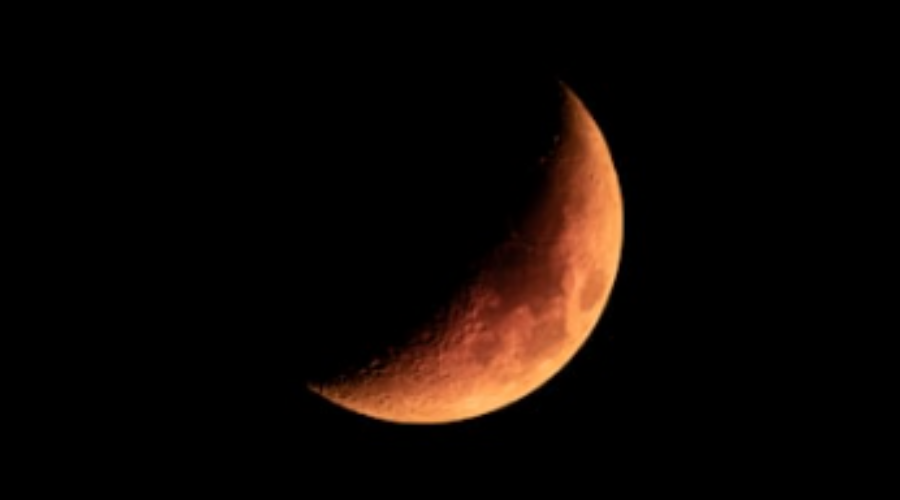
At its peak, approximately 93 per cent of the Moon will be covered by Earth’s shadow, making it a particularly deep partial eclipse.
Visible Across Canada
The good news for Canadian skywatchers is that nearly the entire eclipse will be visible from coast to coast, weather permitting.
Most parts of the country will be able to observe the event from beginning to end, while some locations in Western Canada will see the eclipse already underway as the Moon rises.
Because lunar eclipses unfold gradually over several hours, there’s plenty of opportunity to step outside and enjoy the show.
When to Watch
The Moon will begin entering Earth’s outer shadow during the evening of August 27.
The more noticeable portion of the eclipse begins around:
- 10:33 p.m. Eastern Time on August 27
- Maximum eclipse occurs at approximately 12:13 a.m. Eastern Time on August 28
- The visible partial eclipse ends around 1:52 a.m. Eastern Time
During the deepest part of the eclipse, most of the Moon will appear darkened as it moves through Earth’s shadow.
Will It Turn Red?
One of the most common questions people ask about lunar eclipses is whether they will produce a “blood moon.”
Since this is a partial eclipse rather than a total lunar eclipse, the Moon won’t turn completely red.
However, astronomers say many observers may still notice a reddish or copper-coloured tint along portions of the shadowed Moon, depending on atmospheric conditions and their viewing location.
The effect occurs because Earth’s atmosphere bends and filters sunlight, allowing red wavelengths to reach the lunar surface while blocking much of the other light.
No Special Equipment Needed
Unlike a solar eclipse, a lunar eclipse is completely safe to view with the naked eye.
No protective glasses, filters, or special equipment are required.
All you need is a reasonably clear view of the sky.
For those who want a closer look, binoculars or a small telescope can provide spectacular views of the Moon’s craters and surface details as the eclipse progresses.
Modern smartphones equipped with night photography modes may also be capable of capturing impressive images.
A Busy Month for Skywatchers
The lunar eclipse is just the latest in a series of astronomical events that have delighted skywatchers throughout August.
The month has already featured:
- A partial solar eclipse visible in parts of Europe
- The annual Perseid meteor shower
- A close conjunction involving Jupiter and Mercury
The upcoming lunar eclipse provides another opportunity to step outside and appreciate the wonders of the night sky.
A Free Show in the Sky
One of the best things about a lunar eclipse is its accessibility.
There are no tickets to buy, no equipment to rent, and no special expertise required.
Simply find a dark spot, look up, and enjoy one of nature’s most fascinating displays.
If skies remain clear across the region, the night of August 27 could provide a memorable view of the Moon as it slowly slips into Earth’s shadow and emerges again a few hours later.